Find out what's new at CPEDX here!
A typical X-ray fluorescence (XRF) instrument consists of an excitation source (X-ray tube) and a detection system.
The X-ray tube generates incident X-rays (primary X-rays) that excite the sample under test. Each element in the excited sample emits secondary X-rays, and the secondary X-rays emitted by different elements have specific energy properties or wavelength characteristics.
The detection system measures the energy and amount of these emitted secondary X-rays. The instrument software then converts the information collected by the detector system into the type and amount of each element in the sample.
The following diagram shows a basic benchtop EDXRF analyser.
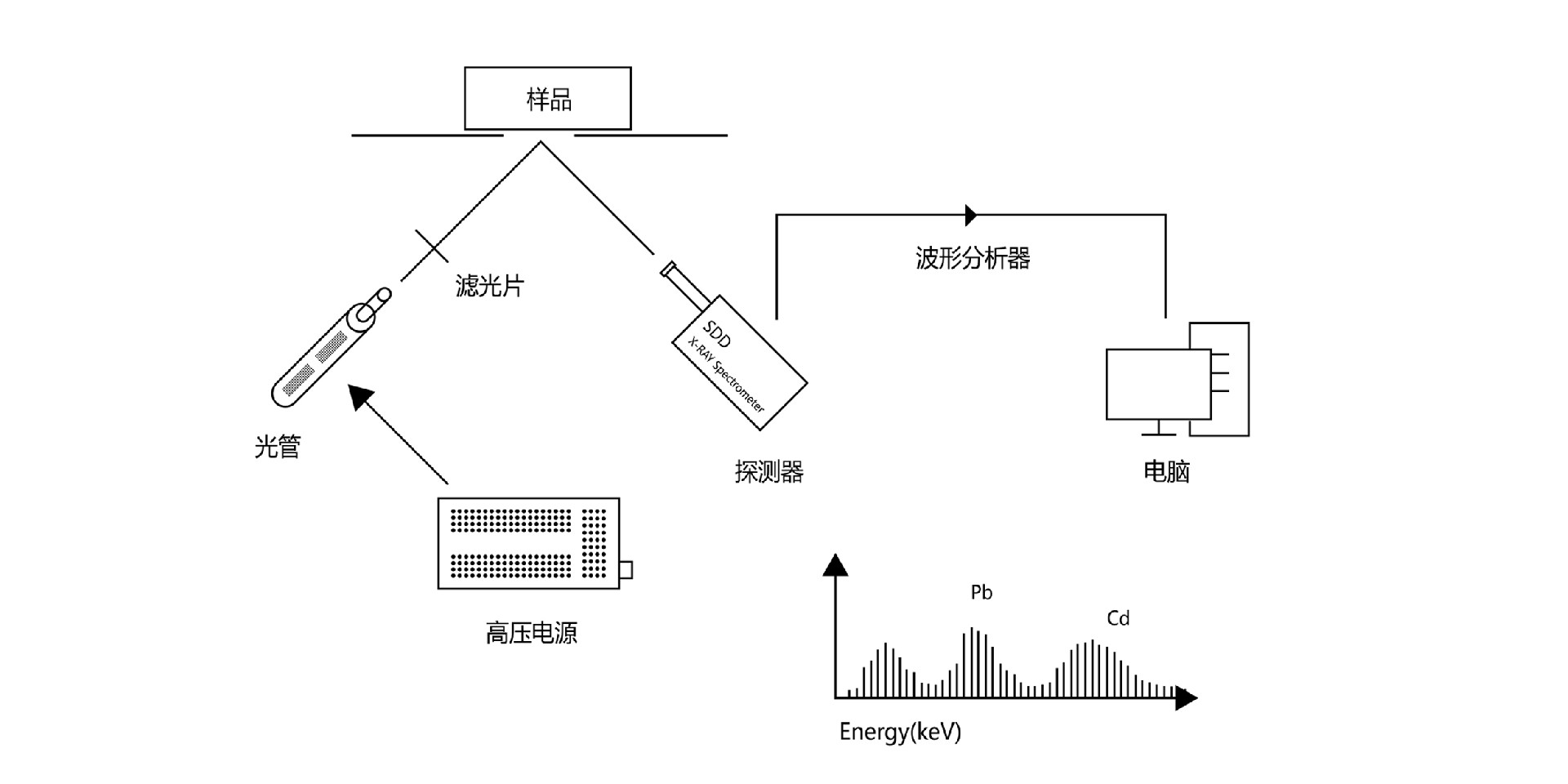
Figure Schematic diagram of a basic benchtop EDXRF analyser
X-ray generator as an X-ray source
X-ray beam optics to control spot size
Sample stage
Detectors (Si-PIN and SDD)
Preamplifier and digital pulse processor to process fluorescent X-ray signals
Computer